Custom Business Operating System
Designed and implemented by Heorhii Tulchyi and the team.
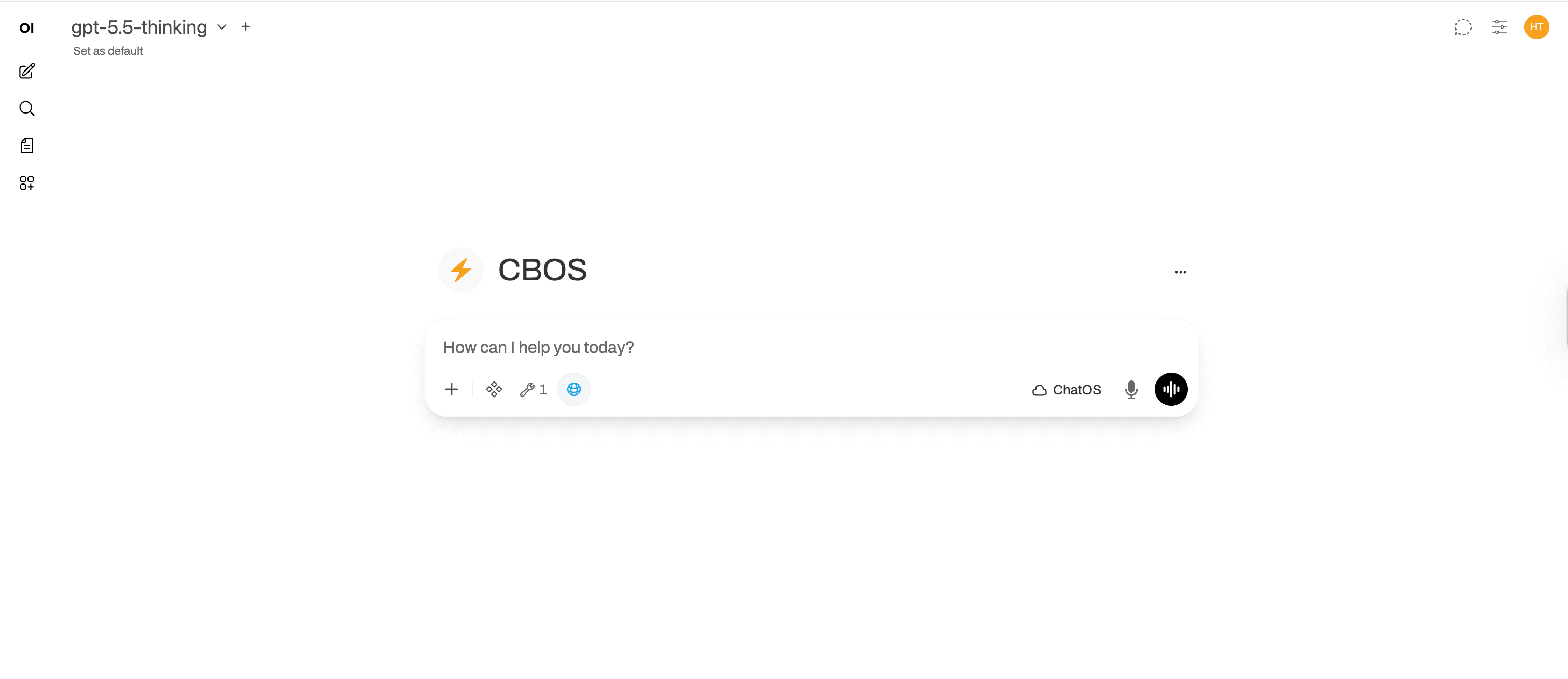
- Client
- Primary Research & Market Intelligence Company
- Team Size
- 51–200 employees across 25+ countries
- Scope
- Workflow-first platform design, multi-provider LLMs via API, custom skills and data collections, custom integrations, compliant file management
- Solution Summary
- A Custom Business Operating System built around the workflows teams already used every day -- unifying a fragmented tool stack, enforcing data compliance, replacing per-seat AI subscriptions with usage-based pricing, and giving every team member access to LLMs and integrated tools with plain English, so researchers spend less time on mechanical busywork and more on the billable customer-facing work that drives revenue.
The Client
The client is a primary research firm that delivers qualitative and quantitative market insights to strategy consultancies, Big Four firms, and private equity investors. Founded in 2021 and headquartered in Limassol, Cyprus, the company has grown to a globally distributed team supporting over 1,000 transactions and market studies in 140+ countries and 35+ languages.
Their core service -- conducting B2B expert interviews for commercial due diligence and strategy projects -- demands speed, precision, and coordination across time zones. When a PE firm needs 40 interviews within three days to inform an acquisition decision, there is no room for tool friction or workflow ambiguity.
The Problem
As this company scaled rapidly, nearly tripling its team in a single year, several compounding problems emerged.
Fragmented tool stack
The tools people relied on daily were multiplying, but they weren't connected. Researchers used one platform for prospect sourcing, another for document drafting, another for data analysis, and yet another for communication. Every task meant switching contexts, copying data between apps, and losing time to friction that had nothing to do with actual research.
Inconsistent AI adoption
Some team members wanted to use AI for drafts, research acceleration, and data analysis. Others stuck with manual workflows entirely. There was no shared infrastructure, no standard approach, and no way to ensure consistent quality across the team.
Data compliance and confidentiality at risk
The most critical constraint. The client handles highly sensitive data -- commercial due diligence materials, proprietary deal intelligence, confidential customer information. Employees are not permitted to input this data into external consumer LLM products, where data handling terms are unclear and data may be used for model training. The team needed AI to stay competitive, but consumer AI tools were off-limits for their actual work.
Per-seat AI pricing doesn't scale for SMBs
At $20–30 per seat per month for standard team plans, a 100-person company pays $2,000–3,000/month even if only a fraction of the team actively uses AI on any given day. Enterprise tiers with stronger data terms cost considerably more. For a fast-scaling firm, that fixed cost creates friction in the decision to roll out AI broadly -- the opposite of what drives adoption.
Slow, manual research workflows
Company and contact sourcing -- a daily activity -- required manually searching across LinkedIn, company websites, and data platforms separately, then cross-referencing results by hand. For a firm that promises first results within 48 hours, every manual step directly impacts delivery speed.
The Solution: CBOS
We built CBOS (Custom Business Operating System) on top of OpenWebUI, an open-source chat interface. But calling it a “chat tool” undersells what it became.
The approach was workflow-first. Before writing a line of code, we mapped the use cases the client's teams were already executing daily: how researchers sourced companies, how they found contacts, how they drafted and edited documents, which tools they switched between, and where the friction lived. CBOS was then built to support those exact workflows -- with purpose-built skills, data collections, and tool integrations designed around how people actually worked.
The result is a platform where employees interact with LLMs from multiple providers, access integrated external tools, manage files, and execute complex research workflows -- all through plain English conversation, all within a company-controlled environment where data never leaves approved infrastructure and is never used for model training.
The point of all this isn’t the automation itself -- it’s what the automation frees people to do. When the mechanical steps of research collapse into a single prompt, researchers get those hours back and spend them on the work that actually generates revenue: running expert interviews, sharpening due diligence analysis, and shipping deliverables to customers.
Design PrincipleWe didn’t start with technology and ask the team to adapt. We started with the workflows people were already doing every day -- sourcing companies, researching contacts, drafting documents, analyzing data -- and built the platform around those. Every skill, every integration, and every data collection in CBOS exists because a real team was already doing that work manually and needed a better way.
How it works
The build process started with the teams, not the technology. We mapped the use cases the client's employees were already executing every day -- the research workflows, the document types they produced, the data sources they relied on, the handoffs between tools that created friction. Each of these became the blueprint for a “skill” inside CBOS: a modular capability, purpose-built for a specific workflow, that can be activated (manually or automatically) per conversation.
For each skill, we created the supporting infrastructure the workflow required: data collections, API integrations, prompts, output formatting, and tool connections. The company research skill, for example, wasn’t a generic “search the web” feature -- it was built specifically around how the client's team of researchers already sourced companies and contacts, connecting the exact platforms and data providers they used daily into a single conversational flow.
All LLM access runs through API integrations with providers like OpenAI and Anthropic, where enterprise data handling terms apply -- meaning customer data is never used for model training and never stored beyond the session. This solved the compliance paradox: teams get full AI capability without any data security compromise.
Critically, the API model also solved the cost problem. Instead of paying per seat regardless of usage, the client pays only for actual consumption -- tokens processed, queries made, work done. The platform itself runs on a simple VM with low monthly infrastructure costs. During busy weeks, usage scales up and the bill reflects real value delivered. During quieter periods, costs drop accordingly.
Platform Architecture
A modular operating system where every capability was built because a real team had a real workflow that needed it.
Team Member
Plain English conversation interface
Describe what you need -- no command line, no tool-switching.
CBOS Platform (OpenWebUI)
Routing, skill selection, knowledge RAG search, session management
The operating system that orchestrates skills and tools per conversation.
Multi-Provider LLMs (via API)
GPT, Claude or any other -- switchable per task
Enterprise data terms: customer data is never used for model training.
Integrated Tools
Microsoft 365, ZoomInfo, social media APIs, web scraping, search, etc.
Enabled per conversation, used in plain English.
ChatOS Personal Filesystem
Private document workspace
Create, edit, and analyze files with AI -- fully isolated per employee.
This isn’t a generic AI chatbot that the team had to figure out how to use. It’s a modular operating system where every capability was built because a real team had a real workflow that needed it.
Company and People Data Sourcing
This was one of the first workflows we built around. Company and contact sourcing is what the client's researchers do every day -- it’s the foundation of their entire service. The company and people research skill connects to LinkedIn, X (Twitter), Facebook, Instagram, and Reddit through a single conversational interface, so a researcher can search all platforms simultaneously with one prompt. We integrated ZoomInfo as an enableable tool within the same conversation -- once the initial research is complete, the researcher activates it and asks for verified contact details without leaving the chat.
Can you search all social pages, LinkedIn, X, Facebook and Instagram
for Butchers in the UK that have interacted (liked, commented, followed)
with Company X, please output with
columns in a markdown table
The output is a structured table -- ready for outreach planning. What used to take a researcher 30–60 minutes of cross-platform searching now happens in a single conversation turn. That reclaimed time goes straight back into the customer-facing research the firm actually bills for.
AI-Native File Creation and Editing
Document production was another daily workflow we identified early. Teams at this firm produce documents constantly -- interview guides, analysis reports, competitive landscapes, deliverables to customers.
So we added the ChatOS file management solution to cover this use case. ChatOS gives each team member a personal, isolated filesystem inside CBOS. Files can be uploaded, created, read, edited, and analyzed directly through conversation. The AI model doesn’t just see the content of a file -- it can interact with the file itself: reformatting spreadsheets, updating Word documents, building presentations, and exporting the results.
Each employee’s ChatOS workspace is fully private. Only they and their AI model have access. For a company handling sensitive due diligence materials, this isn’t a feature -- it’s a requirement.
Just as importantly, automating the mechanical side of document production -- the formatting, the reformatting, the repetitive edits -- frees researchers to spend their time on the substance: the analysis and customer deliverables that the firm is actually paid to produce.
What Changed
Because CBOS was designed around the workflows teams were already doing -- not around a generic feature set -- adoption was immediate and organic. The platform slowly but surely became the central hub where many of the tools people use daily come together.
Tool Consolidation
Multiple disconnected platforms converged into a single conversational interface. Researchers stopped switching between apps and started describing what they needed in plain English.
Compliant AI Access
The compliance paradox was resolved. Every team member has full access to frontier models through API integrations that guarantee customer data is never used for training and never stored beyond the session.
Equal Access
Every team member -- regardless of technical skill -- gained consistent access to AI. Because skills were modeled on workflows people already knew, the learning curve was minimal. The interface is a conversation, not a command line.
Built-In Privacy
Personal file workspaces ensure sensitive due diligence materials stay confidential by default. No shared file pools, no accidental data exposure, no reliance on employee discipline to maintain security.
Pay-for-Usage Economics
Per-seat subscriptions were replaced with pure usage-based pricing. The company pays for tokens consumed, not seats provisioned. The entire platform runs on a single VM -- AI costs scale with actual work output, not headcount.
Focus on What Pays
With the mechanical steps of research and document production automated, that reclaimed time flows back into billable customer-facing work -- expert interviews, due diligence analysis, and deliverables. The platform takes over the busywork so people spend their hours on the work that actually drives revenue.
The deeper payoff is where all that reclaimed time goes. Every workflow that moves onto CBOS hands hours back to the people doing it -- hours that get reinvested into the billable customer-facing work that drives the business: more expert interviews, sharper due diligence, faster deliverables. And because CBOS grows skill by skill as new use cases are identified, that effect compounds: the more of the busywork the platform absorbs, the more of each researcher’s day is spent on the work that actually pays.
Why This Approach Works
Most AI adoption fails not because the models aren’t capable, but because the implementation doesn’t fit how people actually work, doesn’t meet the security requirements of the data they handle, or doesn’t make financial sense at scale.
CBOS works because it solves all three problems at once. It meets people where they already are (in a conversation), keeps data where it needs to stay (inside approved infrastructure), and aligns costs with actual usage instead of headcount. But the reason adoption stuck is simpler: the platform was built around the work people were already doing. Every skill maps to a real workflow. Every integration connects a tool the team already relied on.
And once it sticks, the return is straightforward: every hour the platform takes off a researcher’s plate is an hour redirected to billable customer-facing work. For a company like this, where speed, accuracy, and confidentiality are non-negotiable, this isn’t a productivity hack. It’s operational infrastructure that keeps people focused on the billable work that actually drives the business.
Need Help Implementing AI in Your Organization?
I help companies navigate AI adoption -- from strategy to production. Whether you are building your first LLM-powered feature or scaling an agentic system, I can help you get it right.
LLM Orchestration
Design and build LLM-powered products and agentic systems
AI Strategy
Go from idea to production with a clear implementation roadmap
Compliance & Safety
Build AI with human-in-the-loop in regulated environments